
Translating societal challenges into guidelines for the bank
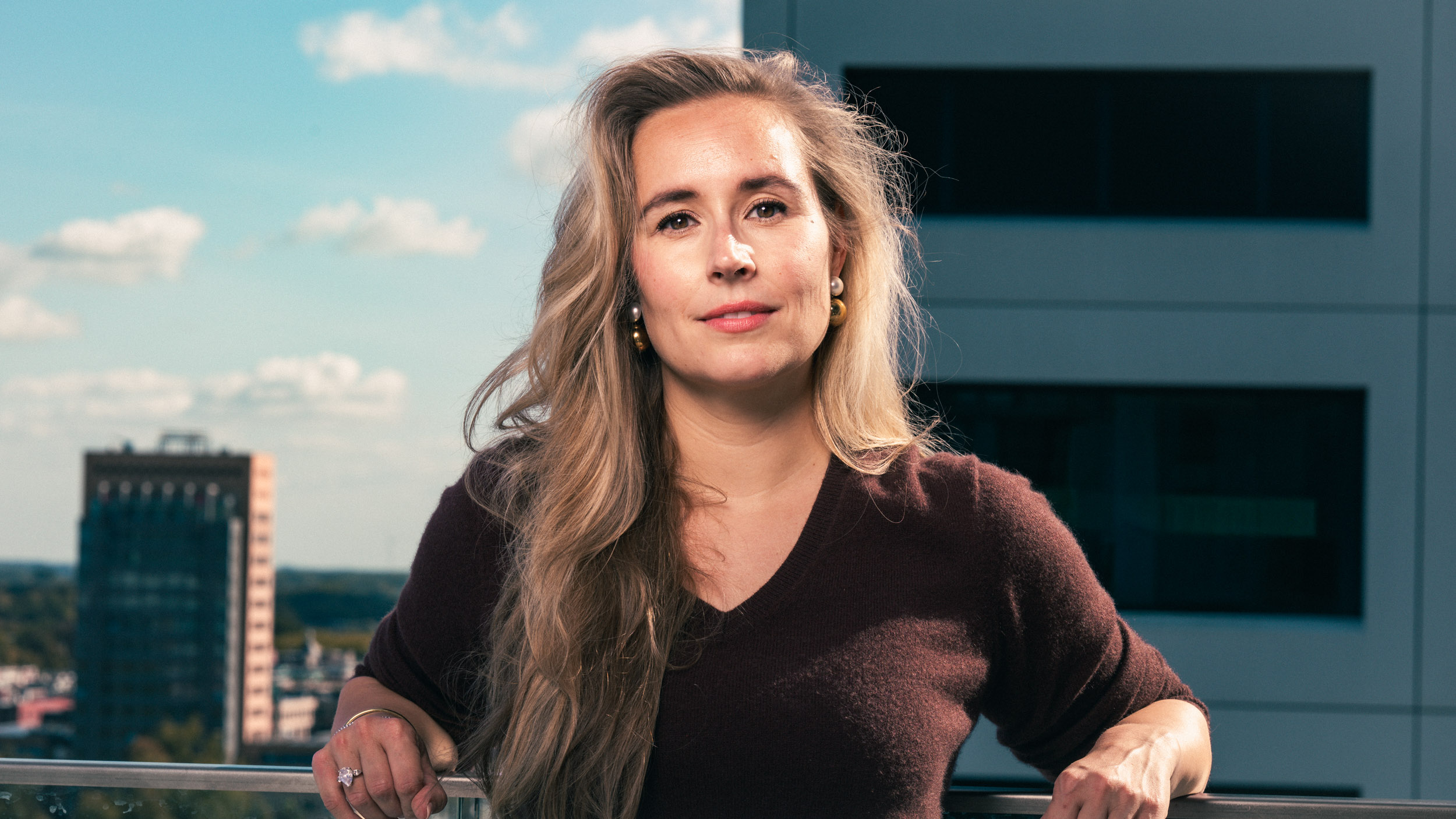
Sustainability within a large bank requires more than idealism: good intentions alone are not enough without strategic insight. As Sustainability & Human Rights Lead within Procurement, Nelleke Hoffs works to embed sustainability and human rights into everyday procurement decisions. Her recent nomination for the Top 50 Sustainable Finance list shows that her approach is gaining recognition beyond the bank as well.
Eight years ago, this was not the career path Nelleke had mapped out for herself. She started in Financial Crime at ABN AMRO, moved into human rights, and now serves as Sustainability & Human Rights Lead within Procurement. Looking back, she sees a common thread running through her career: translating complex societal challenges into practical guidelines for the bank. The opportunities she has had within ABN AMRO to continue moving toward topics she cares about demonstrate the wide range of directions a career within our organisation can take.
In her current role, Nelleke is involved in decisions concerning a broad range of products and services the bank needs to operate, from facilities and IT to external service providers. “My goal is not to build sustainability and human rights as a separate programme within ABN AMRO, but rather to make these topics part of everyday decisions and processes.”
During procurement processes, Nelleke’s team ensures that sustainability and human rights risks are considered in decision-making. This applies to everything from software and laptops to catering, cleaning services, and business travel. “You cannot expect your clients to have these matters in order if you are not addressing them yourself,” she explains. “We even check the origin of the flowers that new colleagues receive on their first day at work.”
Idealism is not enough
Through her work, Nelleke has learned that conviction alone is not enough to drive change. With her background in international criminal law and human rights, her initial reaction was often: this is so important, why wouldn’t everyone want to contribute? “But within a bank, sustainability competes with other priorities,” says Nelleke. “You have to consider costs, efficiency, and commercial interests. If you want to get things done, you need to combine idealism with business instinct. It helps to put yourself in the shoes of colleagues from other departments. I often ask myself: what’s in it for them?”
Her impact becomes visible through very practical decisions. For example, she once asked a cleaning services provider how it ensured that the employment conditions of temporary workers were properly managed. “When you ask those kinds of questions, you encourage a company to take action. Topics such as working conditions then move higher up the internal agenda.” As a result of Nelleke’s inquiry, the company strengthened its employee satisfaction survey. According to her, this is exactly how meaningful change happens: by continuing to ask these questions, you gradually raise the standard step by step.
Not a straight line, but a common thread
Today, Nelleke recognises the value of her unexpected career path. “You do not leave your background behind when you step into a different field. You bring it with you. At the same time, you learn how an organisation works, where decisions are made, and how to drive change.” For Nelleke, that is the most important lesson of her career so far: impact comes in many different forms. But the better you understand how an organisation moves and operates, the greater your influence can be.
Searching for your next challenge? Create a Job Alert and never miss a new vacancy at ABN AMRO.

.jpg","\/uploads\/20251029 Werken bij ABN AMRO_116_ (2).jpg","\/uploads\/20251029 Werken bij ABN AMRO_155_ (2).jpg","\/uploads\/20260706 ABN AMRO_0616_.jpg","\/uploads\/20260629 ABN AMRO_0666_.jpg"])